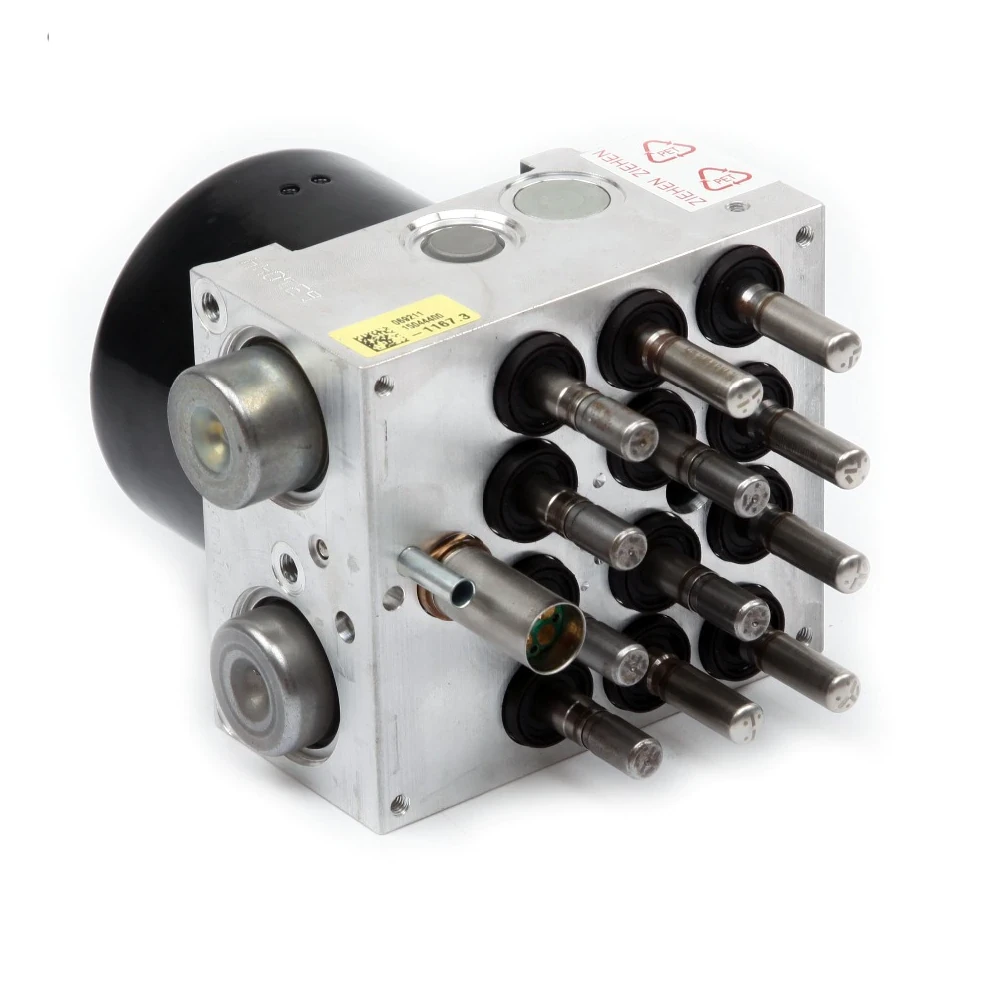
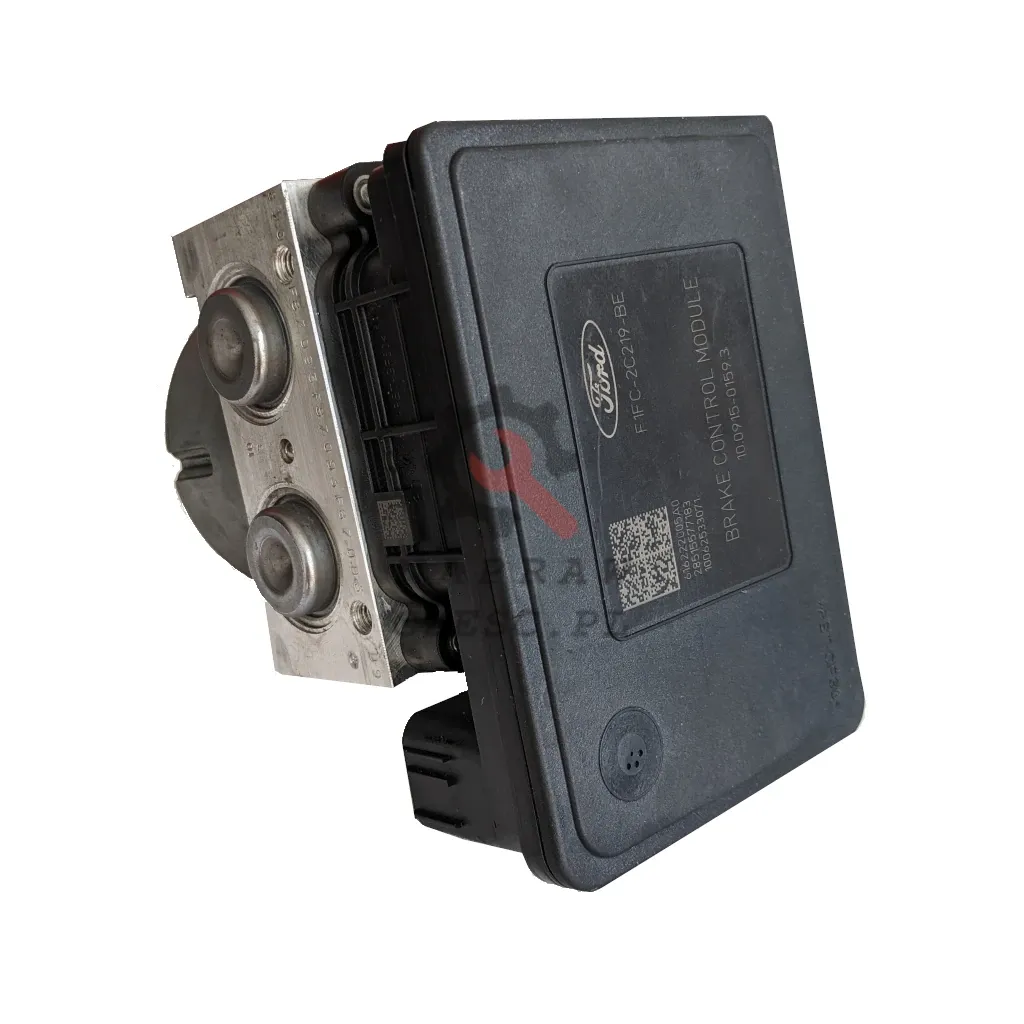
The hydraulic unit block is a part with multiple channels inside where brake fluid flows under high pressure. It is blocked by valves to prevent the wheels from skidding. In versions with ESP, it also has a pressure sensor.
Let's start with the symptoms. Customers often call in saying they have a problem with a soft or sticking brake pedal, or a wheel locking for a few seconds after releasing it. The car pulls to the right or left or brakes unevenly. In the worst case, a wheel locks or doesn't brake at all. Most often, these are two wheels in a cross pattern, for example, the left front and right rear, or vice versa. We also once had a case where a customer replaced a set of brake discs and they quickly wore out, which can also be a symptom of faulty hydraulics.
These symptoms may be caused by brake fluid that hasn't been replaced, or the braking system hasn't been cleaned, or air has built up in it. Of course, there may be problems with the calipers, brake lines, brake master cylinder, or servo, but if they have already been checked, it's very likely that the hydraulic unit pump is faulty. Our current record holder is an ATE MK100 pump, which seized after 33,000 kilometers.
What can we do about this problem? There are two options. The first is to replace the hydraulic unit with a second one. Unfortunately, this isn't always a good option, as some models have a pressure sensor assigned to the controller. The second option is to have the hydraulic unit repaired in-house, which is simpler and cheaper due to the decreasing availability of parts.
Once we've discussed the hydraulic unit pump, we can move on to the second part of the material, specifically the ABS pump controller, which is the electronic component. If the ABS light comes on in your car, the first thing you should do is take it to a mechanic for a car diagnostic. You need to read the error codes from the ABS controller and the controller numbers.
Once you have this information, you can call us for a consultation on whether the fault can be repaired. Unfortunately, electronic problems are much worse than hydraulic ones, as some of them are beyond repair. Nevertheless, most things can be done.
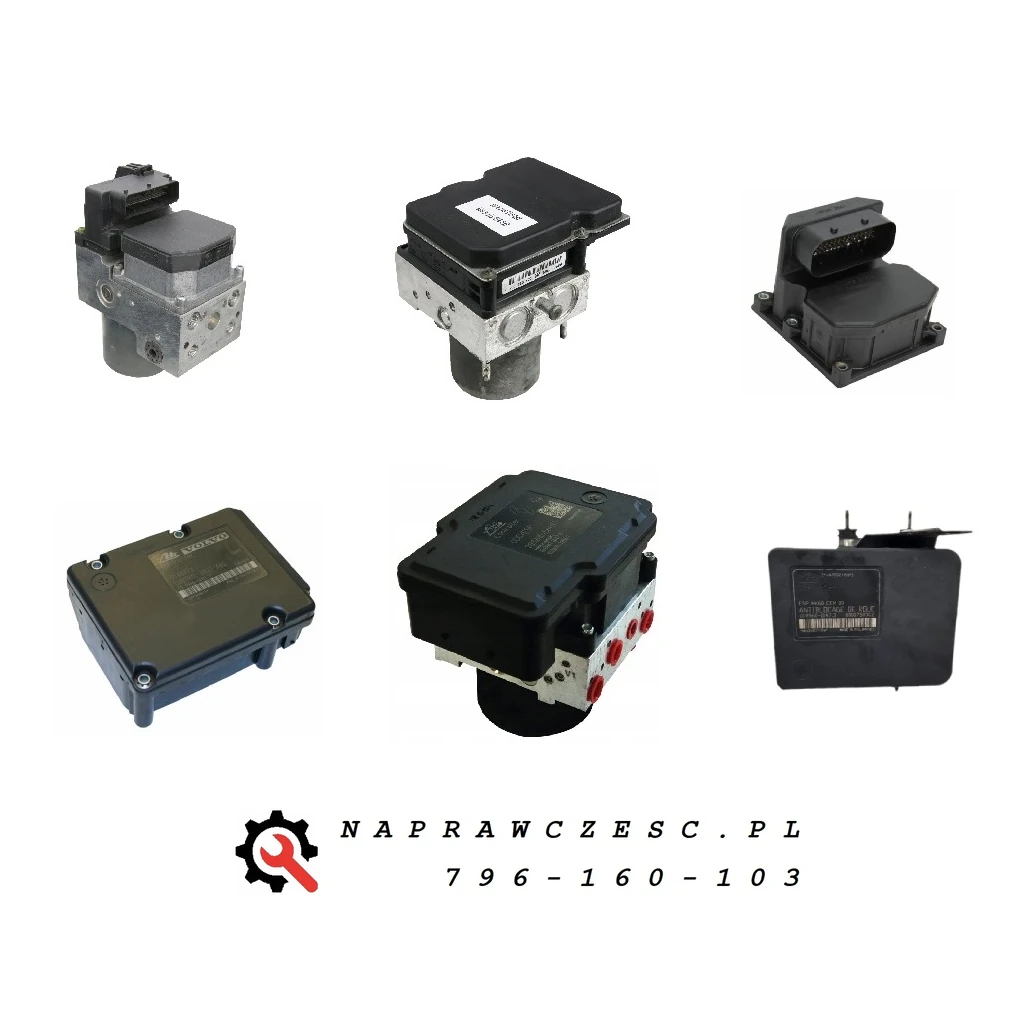
Now let's move on to discussing the types of pumps. Unfortunately, many of these have been installed in Fords over the years.
The first pumps were the ATE MK20 and MK25.
These are pumps from the 1990s and early 2000s. These pumps mainly had two problems:
- C1095 - Engine relay
- B1342 - Control module failure
These are errors that can be easily repaired.
The next ABS pump is the ATE MK60. They occurred from 2002 to 2008.
Here we have a larger number of faults that could have occurred in the controller.
More precisely:
- C1288 - Pressure sensor - circuit damaged
- C1267 - Internal error of the control unit
- C1095 - Motor relay
- C0044 - Brake pressure sensor circuit damaged
After 2008, the next generation of MK60 pumps came and it is the so-called MK61 or MK60.1 pump
In these pump models, problems with errors were common
- U3000 - Internal error of the controller and
- C0020 - ABS pump motor (damaged circuit)
The next product of the ATE company was the ABS MK100, which has been available since 2013 until now.
Here, problems with electronics are very rare and in most cases, if they occur, they are currently beyond repair. The problem here is with the hydraulics, which was discussed at the beginning of the material.
Bosch 5.3 or 5.4 pumps were also installed in Fords, which, among other things, broke down due to wheel sensor errors and lack of communication with the module.
However, when it comes to the Bosch 8.0 pump, the most common faults are:
- 5D8D - Return pump
- 5B02 / 1B02 - Pump motor / engine relay damaged - this error could result in the engine running all the time.
Occasionally, there were also problems with lack of communication with the ABS controller.
We will end with this pump, as there were also other ABS pumps, but in smaller numbers. A good example is the TRW pump, which, like the MK100, had problems mainly with the hydraulics.
The symptoms, faults, and error codes I've described here are the most common. So if you have any other errors or problems with your ABS pump, please contact us, but before you call, remember these two important things: Write down the ABS controller or pump number and read the error codes if the ABS light on the dashboard is on.
Also remember to share this material on forums and social media. This can save someone from unnecessary expense or misdiagnosis.
If you liked the video, leave a like and subscribe.
Today, we're sharing about the problems with ABS pumps in Fords.
We will divide the material into two parts: discussing the hydraulic part, which is the hydraulic unit block, and the second part, where we will discuss problems with the control units.